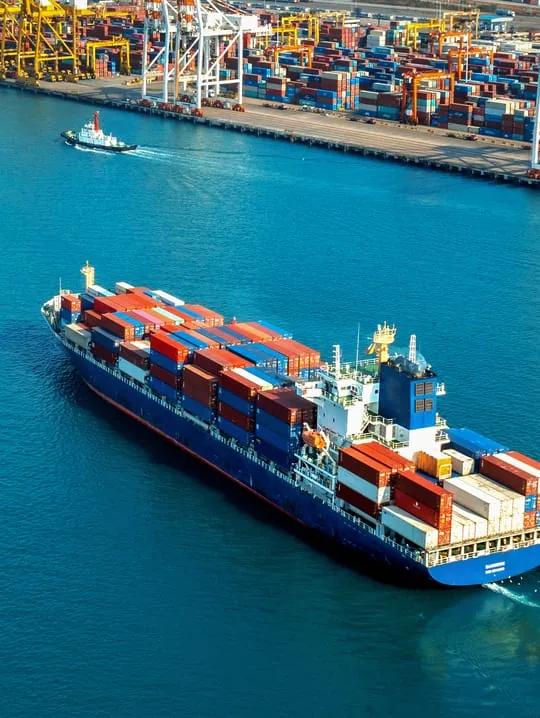
The core documents behind most international shipments, from the commercial invoice and packing list to the bill of lading and certificate of origin.
6 min read

Goods rarely get stuck at a border because of the product itself. Much more often, a shipment is delayed because a document is missing, incomplete or inconsistent with another document. Customs authorities, banks and shipping lines all rely on paperwork to know what is moving, who owns it and whether it may enter the country.
This checklist covers the documents used in most international shipments, what each one does, and how to avoid the most common errors.
Core commercial documents
Commercial invoice
The commercial invoice is the seller's bill to the buyer and the main document customs uses to assess duties and taxes. It usually includes:
- seller and buyer names and addresses,
- invoice number and date,
- a clear description of the goods, with quantities and unit prices,
- the total value and currency,
- the Incoterm and named place,
- the HS (Harmonized System) code for each product,
- the country of origin of the goods,
- payment terms.
Tip: the description must be specific. "Food products" is likely to cause questions; "Cashew kernels, W320, whole, in 22.68 kg cartons" is not.
Packing list
The packing list describes how the goods are packed: the number of packages, the type of packaging, the contents of each package, and the net and gross weights and dimensions. Customs uses it to inspect shipments, and forwarders use it to plan loading.
The figures on the packing list must match the commercial invoice and the bill of lading. Mismatched weights or package counts are among the most common causes of delay.
Pro forma invoice
A pro forma invoice is a preliminary invoice issued before the shipment, often with the quotation. Buyers use it to arrange payment, open a letter of credit or apply for an import licence. It is not a demand for payment.
Transport documents
Bill of lading (sea freight)
The bill of lading (B/L) is issued by the carrier or its agent. It has three roles:
- Receipt confirming the carrier has received the goods.
- Evidence of the contract of carriage between the shipper and the carrier.
- Document of title (for a negotiable B/L), meaning whoever holds the original can claim the goods at destination.
Because of that third role, a negotiable bill of lading is central to payment by letter of credit. Common variants include the original B/L, the telex release and the sea waybill, which is not a document of title and suits trusted trading relationships.
Air waybill (air freight)
The air waybill (AWB) is the equivalent document for air shipments. It acts as a receipt and contract of carriage but is not a document of title.
Road and rail consignment notes
Road shipments commonly use a CMR consignment note, and rail shipments a CIM consignment note. Like the air waybill, these confirm receipt and carriage terms.
Origin and compliance documents
Certificate of origin
A certificate of origin states the country where the goods were produced. It is usually issued or stamped by a chamber of commerce or an authorised body. Customs uses it to apply the correct duty rate, trade measures and statistics.
Where a free trade agreement applies, a preferential certificate of origin can reduce or remove import duties at destination. The rules of origin under each agreement are specific, so check them early.
Phytosanitary certificate
For plants and plant products, including many agricultural goods, the exporting country's plant protection authority may need to issue a phytosanitary certificate. It confirms the goods were inspected and meet the importing country's plant health requirements.
Fumigation certificate
Wooden packaging and some commodities must be treated against pests. Wooden pallets and crates commonly follow the ISPM 15 standard and carry its stamp. Some buyers or authorities also ask for a fumigation certificate for the cargo itself.
Inspection and quality certificates
Buyers often ask for an independent pre-shipment inspection or a certificate of analysis to confirm the goods match the agreed specification. Some importing countries require conformity certificates for certain product types.
Export and import licences
Certain goods need a licence to leave the origin country or enter the destination country. Requirements depend on the product and both countries' rules.
Financial and insurance documents
- Insurance certificate: proof that the cargo is insured, required under CIF and CIP and often requested by banks.
- Letter of credit: if payment is by letter of credit, the documents presented to the bank must comply exactly with its terms. Small discrepancies can delay payment.
Quick checklist
| Document | Issued by | Typically needed for |
|---|---|---|
| Commercial invoice | Seller | Customs valuation, payment |
| Packing list | Seller | Customs inspection, loading |
| Bill of lading / air waybill | Carrier or agent | Proof of shipment, release of goods |
| Certificate of origin | Chamber of commerce or authority | Duty rate, trade agreements |
| Phytosanitary certificate | Plant protection authority | Plants and agricultural goods |
| Fumigation / ISPM 15 | Treatment provider | Wooden packaging, some cargo |
| Inspection certificate | Inspection company | Buyer or regulatory checks |
| Insurance certificate | Insurer | CIF, CIP, letters of credit |
| Export / import licence | Government authority | Restricted goods |
Not every shipment needs every document. The exact set depends on the product, the destination, the Incoterm and the payment method.
How to avoid document problems
- Agree the document list before shipment. Confirm with your buyer, forwarder and bank which documents are needed and who issues each one.
- Keep data consistent. Names, addresses, descriptions, weights and HS codes should match across every document.
- Check destination rules early. Requirements change, and some certificates take days to obtain.
- Send copies for review first. Have the buyer or bank check drafts before originals are issued.
- Keep records. Customs authorities can audit past shipments.
Need help with your documents?
Trade documentation is one of the areas where an experienced partner saves the most time. If you are planning a shipment and want guidance on the documents involved, request a quote and tell us the product, destination and Incoterm. We will help you plan the next steps.
This article is general guidance, not legal, tax or customs advice. Rules change; confirm requirements for your shipment with the relevant authorities.
Back to insights